
01 / Requirements and decisions
From the purpose of a project
to the work that delivers it.
Structure business needs, preserve acceptance criteria and connect every requirement to the work and tests that support its review.
FUNCTIONAL SCOPE
What you can manage with Orkenty.
Functional definition
Organise requirements with an identifier, description and criteria that explain expected behaviour. Give analysis, development and quality a concrete shared reference.
Workflow and review
Manage states through the project workflow. Configured rules can require information before a transition so that progress has the necessary context.
Artifact relationships
Link requirements, work items and test cases. Traceability preserves implementation and validation context instead of treating a requirement as isolated text.
Scope and variants
Distinguish common requirements from those specific to a product variant. Review coverage within the selected scope and project or application context.
A definition the team can review
A useful requirement expresses a need and how its fulfilment will be recognised. In Orkenty, rich descriptions, tables and images can support it according to installed capabilities. Explanations, rules and references remain within the engineering process.
Decisions should be expressed in the content and related to the relevant artifacts. A requirement preserves the why; a work item organises the work to address it. Keeping both perspectives helps review changes without confusing a need with a task.
Coverage with meaning
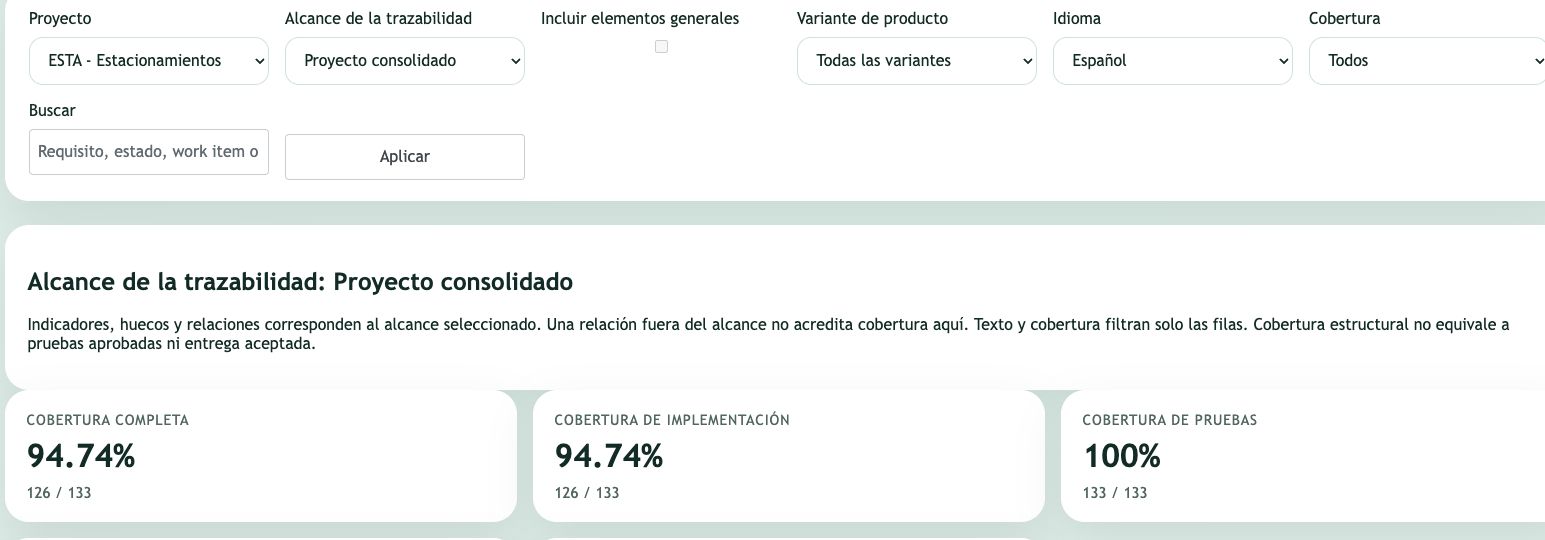
The traceability matrix brings together relationships and indicators to identify requirements without work or tests. Scope and variant filters place those indicators within the query under review.
A linked test provides design coverage. An execution provides an observed result. A relationship alone does not demonstrate that a requirement passed its tests: applicable results and their currency still need review.
Changes that retain context
When a need changes, relationships help locate work and tests that may need review. The team can compare the updated content with documentation and preserved versions.
Traceability supports change analysis but does not replace the team’s impact or acceptance decision. Permissions and workflows determine who can view, modify and advance items.
A PRACTICAL JOURNEY
From setup to team review.
Define the need and its acceptance criteria.
Review scope, variant and requirement state.
Link implementation work and test cases.
Review coverage and results before accepting fulfilment.
ILLUSTRATIVE USE CASE
Put the capability in context.
A requirement calls for purchasing approval by amount. The analyst describes limits and exceptions; development organises linked stories and QA designs authorisation, rejection and boundary tests. Review distinguishes what is linked from what has actually been tested.
Available actions depend on installed version, enabled integrations and current permissions. Review your specific journey in a demonstration. The example is illustrative and is not a customer testimonial.
COMMON QUESTIONS
Understand the scope.
Is a requirement the same as a story?
No. A requirement expresses a need; a story or another work item organises delivery work. Relationships preserve both perspectives.
Does full coverage mean approved?
Structural coverage indicates available relationships. Functional approval requires review of the state, criteria and applicable test results.
Can I review several applications?
Project and subproject context organise applications and relationships within authorised scope. Validate the specific journey in a demonstration.
Explore the other platform areas.
A CONVERSATION ABOUT YOUR ENGINEERING
See Orkenty in the context
of your team.
Tell us what you need to connect. We will prepare a demonstration focused on your requirements, quality processes and delivery workflow.
Business contact:
info@orkenty.com