
03 / Quality and testing
From what needs testing
to what has been verified.
Organise test design and record outcomes within their scope. Connect quality, requirements and delivery to support decisions with reviewable evidence.
FUNCTIONAL SCOPE
What you can manage with Orkenty.
Cases and procedures
Define objectives, preconditions, data and expected outcomes. Steps structure the procedure so another person can repeat the check.
Plans and suites
Organise cases in plans and suites compatible with the project and application. Preserve execution planning context.
Executions and results
Record manual or automated evidence according to enabled workflows and integrations. Observed outcomes remain separate from current case design.
Variant coverage
Distinguish common cases, variant-specific cases and execution targets. Review applicable evidence without treating every variant as tested.
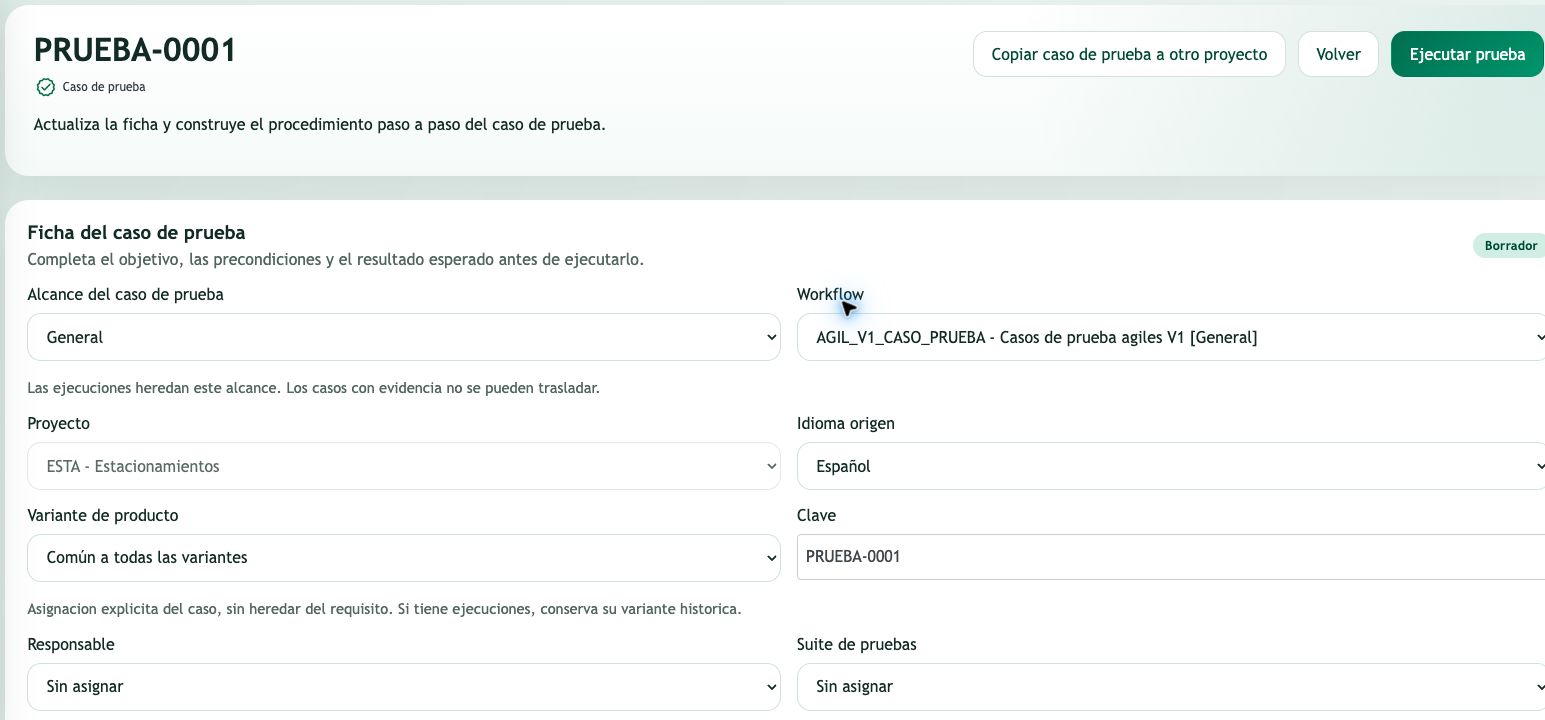
Design a repeatable test
A case describes the behaviour to check and the conditions under which it should be checked. Preconditions, test data and expected outcomes reduce ambiguity before execution. Steps separate actions from checks.
Plans and suites help organise the inventory. Their scope must be compatible with the case and delivery. A classified inventory supports design review even when no execution has been recorded.
Record what actually happened
An execution provides an observed result. Read it alongside its case, plan, release and target where specified. History preserves the record rather than replacing it with the current state of the design.
Assisted and automated flows depend on environment capabilities and integrations. A failure can originate a bug through the enabled flow while retaining the test reference. Generating a case or bug does not demonstrate that a defect has been resolved.
Interpret coverage correctly
A requirement-to-case relationship indicates available design. An applicable execution is needed to claim an outcome. Tracking distinguishes unexecuted work from results actually recorded.
In variant-based products, a common case can provide shared design, but an execution without a target does not mean every variant. Variant queries consider the target before choosing evidence. This prevents structural coverage from being presented as certification.
A PRACTICAL JOURNEY
From setup to team review.
Design the case, conditions and steps.
Organise the applicable plan, suite and scope.
Execute and record the result and evidence.
Review coverage, failures and gaps before accepting delivery.
ILLUSTRATIVE USE CASE
Put the capability in context.
The same sign-in journey exists in two variants. QA preserves common design and records an execution for a specific variant. The query shows that result where applicable and reveals that the other variant still needs evidence.
Available actions depend on installed version, enabled integrations and current permissions. Review your specific journey in a demonstration. The example is illustrative and is not a customer testimonial.
COMMON QUESTIONS
Understand the scope.
Can I combine manual and automated testing?
The platform supports both kinds of recording. Effective automation depends on configured adapters, permissions and workflows.
Does a linked case mean the test passed?
No. A link provides related design. An outcome needs an applicable recorded execution.
What happens when a test fails?
The result remains available for review. Enabled flows can link corrective work or generate a bug with its source evidence.
Explore the other platform areas.
A CONVERSATION ABOUT YOUR ENGINEERING
See Orkenty in the context
of your team.
Tell us what you need to connect. We will prepare a demonstration focused on your requirements, quality processes and delivery workflow.
Business contact:
info@orkenty.com